
Quantum AM-Q-V1
Built to stay up.
A battery gives you 30 minutes and a landing. The Quantum tethered drone system gives you the whole mission. Connect your aircraft to ground power, launch once, and hold position for hours at up to 130 feet. That is the entire pitch, and it is enough.
Pricing
Priced in the open
$6,500 schools & athletics
$9,500 commercial & enterprise
Imported tether systems with similar capability run $25,000 to $60,000, and most will not even print the number. Ours is printed right here. The Quantum is built in Huntsville, Alabama and supported by the engineers who designed it.
Specifications
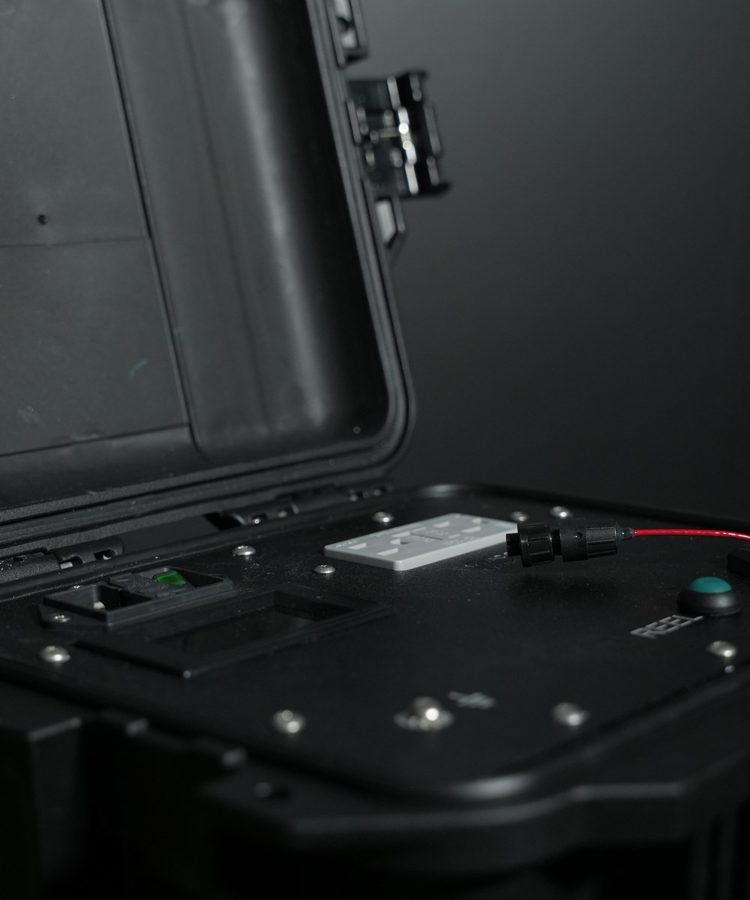
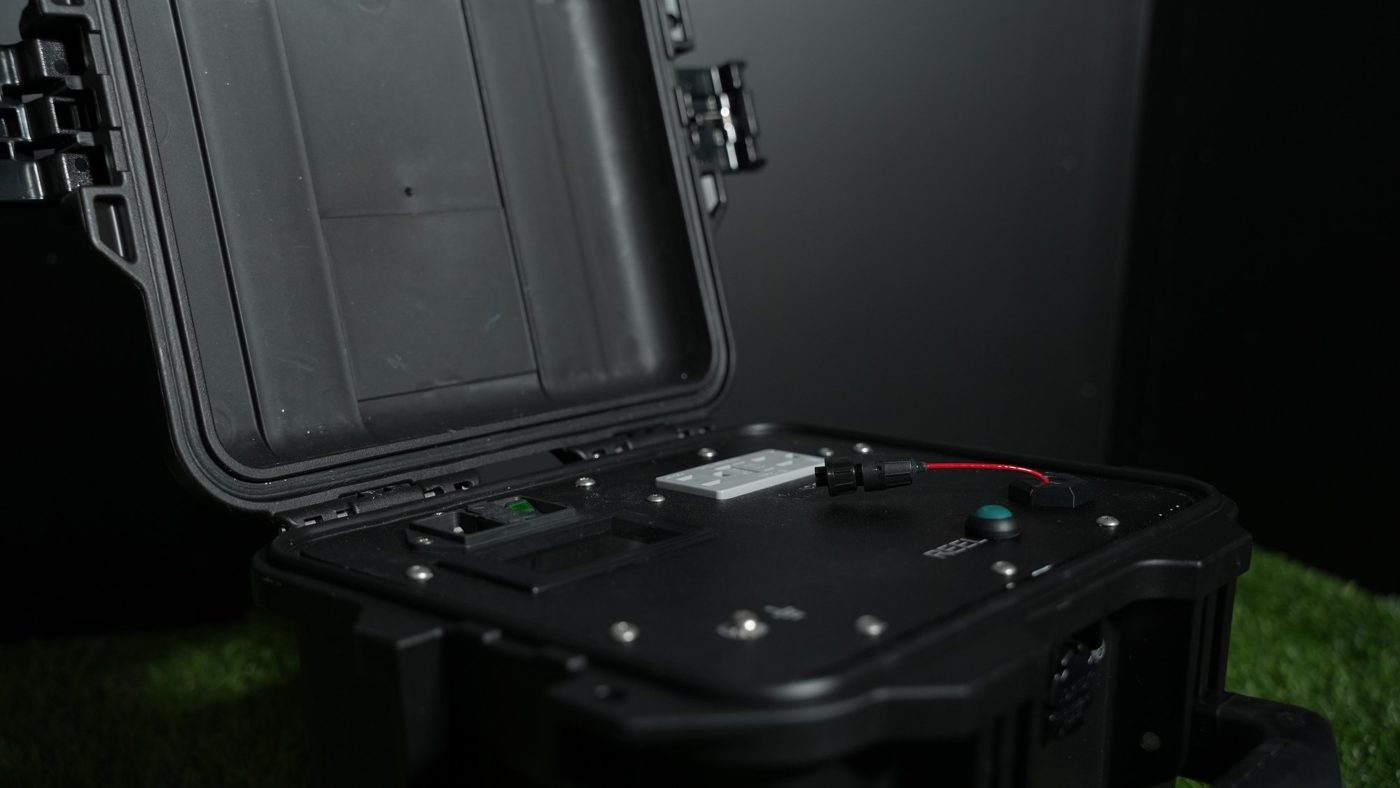
Quantum AM-Q-V1 full specifications
| System | Quantum AM-Q-V1 tethered power system |
|---|---|
| Output Power | 500W continuous (flat) |
| Tether Voltage | 325 VDC typical (250–370 VDC range) |
| Tether Length | 40 m (130 ft) max altitude |
| Air Module | AeroModule AM-V2-01-02 |
| Air Module Input | 160–420 VAC |
| Air Module Output | 9–24 VDC |
| Air Module Weight | 120 g |
| Connector | XC-60 |
| Ground Input | 90–130 VAC, 60 Hz (wall outlet or generator) |
| Operating Temp | −20°C to 40°C |
| Power Modules | Vicor DCM converters (Vicor Corporation, USA) |
| Housing | Pelican protective case (USA) |
| Origin | Designed in Monroe, Louisiana; manufactured in Huntsville, Alabama, USA |
How It Works
Four steps, then it just stays up
Set the station
Place the ground station and connect standard 120V power, from a wall outlet or a small generator.
Clip the module
The 120 g air module mounts to your drone and connects to the tether in minutes. No airframe modification.
Launch once
Continuous power flows up the tether. Fly to station, up to 130 ft, and hold.
Stay covered
Hours of uninterrupted flight. If ground power is ever interrupted, the onboard battery lands the aircraft under control.
Compatibility
Built for the drones you already fly
The Quantum serves the enterprise aircraft programs already own, including the DJI Mavic 3 and Mavic 4 series and the Autel EVO series.
Flying a different airframe? We build tether integrations for new platforms on request, and higher-power systems for larger aircraft are in development.
FAQ
Tethered drone system questions
How long can a tethered drone stay in the air?
How much does a tethered drone system cost?
What drones does the Quantum work with?
What happens if the tether power is cut?
Is a tethered drone legal to fly?
Where is the Quantum made?
Get Yours
Built to order in Huntsville, Alabama.
Tell us your airframe and your mission. You will get a firm configuration and a real price, usually within one business day.